
23 June 2026
Helping care for women with Gestational Diabetes
Gestational Diabetes (GDM) is a common condition in pregnant women, that results in high blood glucose (BG) levels during pregnancy. If not carefully managed, it can have severe consequences for both mother and baby. In collaboration with Clinicians and patients, I worked with my team to solve the major pain points and provide a Software as a Medical Device (SaMD) solution that would delight both user groups.
Problem statement
Most hospitals manage GDM with paper diaries and fortnightly appointments. How might we enable clinicians to get a real-time view of their patients in order to better manage them, whilst also reducing the complexities for the patient, reassuring them and making them more empowered to manage their new condition?


Understanding the users
This project required that we cater for two very different user types, and in order to fully understand the pain points and requirements of each - we spoke to them. Yep, sounds obvious but doesn’t always happen.
Through these discussions and interviews we established the basic requirements that we could use as a foundation for our work.
Patients
The existing method for management was patient's writing in paper diaries their BG levels and visiting the clinic once every 2 weeks. Not only did this mean clinician's only get a snapshot of the patient's condition twice a month, but caused additional burden on the patients having to travel to hospital.
Our first step was to conduct interviews with patients and clinical staff within the Women's Centre at the John Radcliffe Hospital in Oxford. These interviews uncovered several insights, such as a lack of information for the Mothers, which leads to anxiety, and the added stress of a clinic visit just to set up the app and get information on their condition.
These discussions lead to 2 main areas of concentration for the product.
Sending data to the clinician
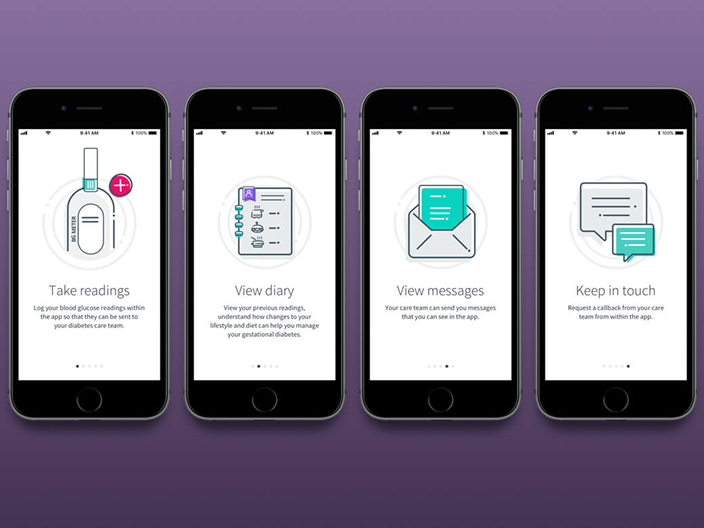
Connect a Bluetooth BG meter with mobile app to sync BG readings at each mealtime.
Add comments to each reading
How might the patient connect their profile to the clinician, without needing to visit the hospital
Understand their condition
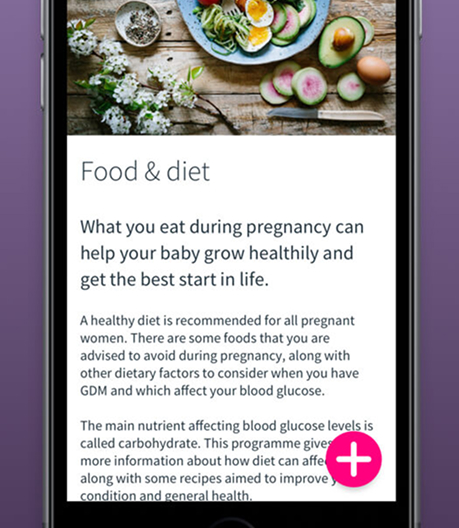
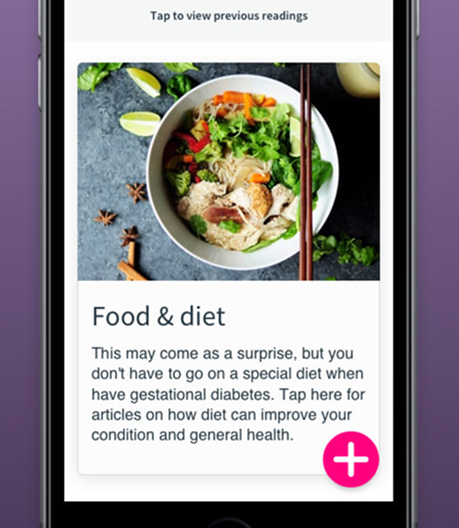
Access NHS approved content and articles on Diet, Excerise and Weight management
View their previous BG readings over time
Clinical staff
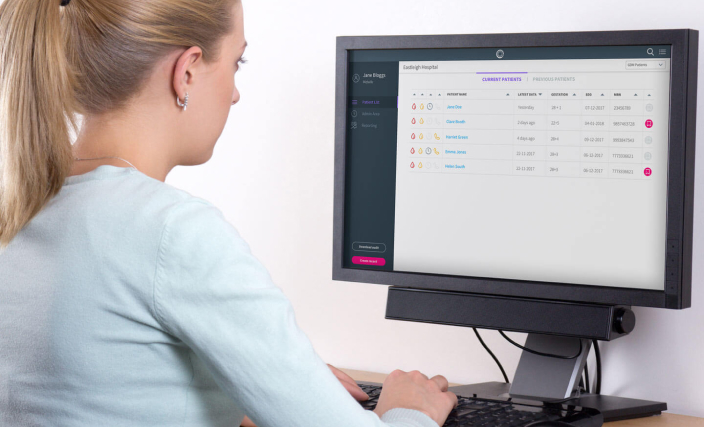
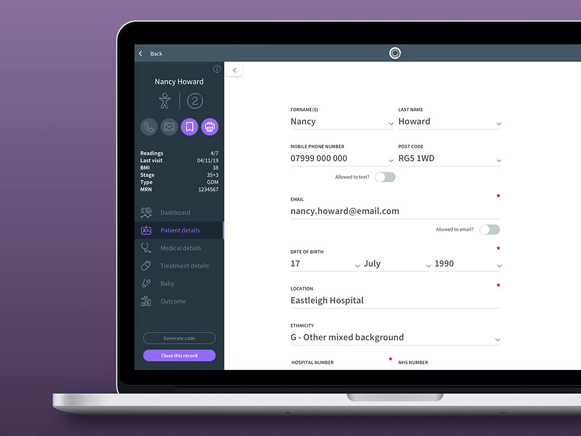
The MVP of this project was a research application developed within Oxford University. Through discussions with Clinicians, we found a number of usability issues within the clinical interface. The patient details page was a 3 column layout with all of the patient’s information. Similar content, such as contact details were not grouped. If a user wished to find the email address and the phone number, having to scan an entire complex page.
These items bore no relationship in terms of proximity or grouping*.
Through these discussions, the team agreed on prioritising the following stories.
Note following UX laws: Hick’s Law and the Common Law of Region
Easily view all of their patients
View a list of patients under their care
Easily filter and sort those patients based upon criteria set by the clinician
Get more detailed information
View individual patient profiles
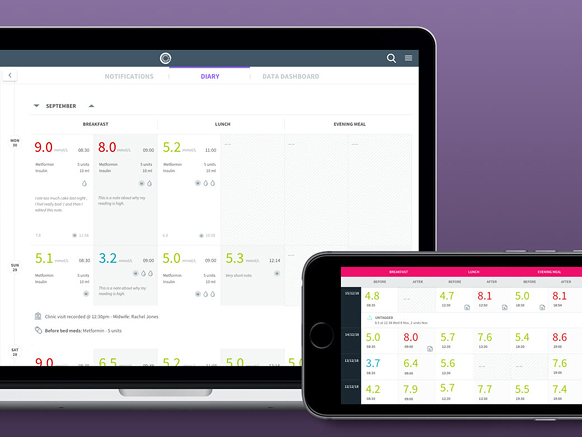
Easily understand a patient’s BG reading history over time
View readings my meal-time
View any comments from patients against specific BG readings
Send a message to individual patients with advice or links to relevant helpful information
Setting priorities
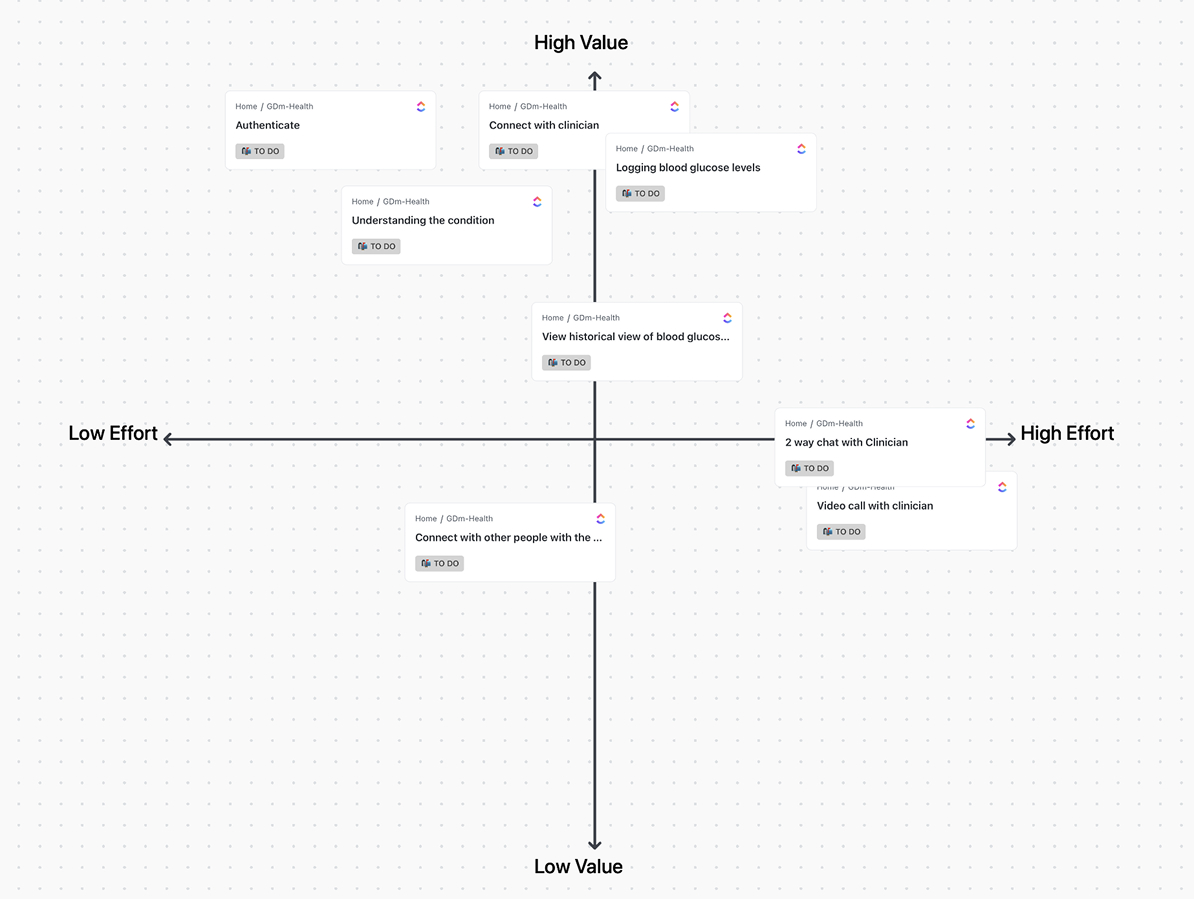
Working with the product and engineering teams, using the feedback we received during our initial research interviews with both user types, we created a priority matrix of features during a workshop session.
Wireframes, prototypes and testing
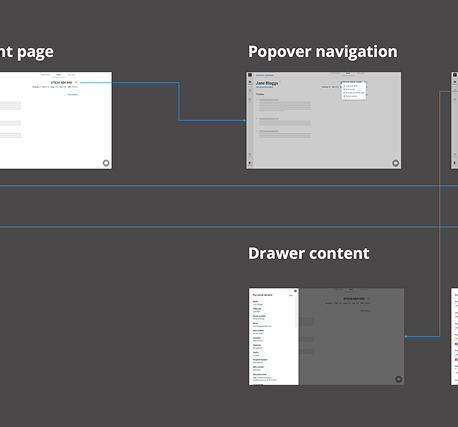
The priority matrix allowed us to get a simple view of the features we should work on next. To gain a clear understanding of how the user would interact with the product, and the initial feature set. This enabled better discussions with the engineering teams, to understand the technical implications and limitations.
Using the wireframes as the foundation, we created initial lo-fi mockups within Sketch and used InVision to turn them into interactive prototypes.
This enabled us to run some initial user tests with both user groups, to understand how they interpret the features and functionality. We did this by running scripted observational tests with users, where we would ask them to perform various tasks and talk aloud as they did. We would document their levels of success, along with any feedback they gave. These reports informed our next round of improvements as we developed higher fidelity designs.
The design phase
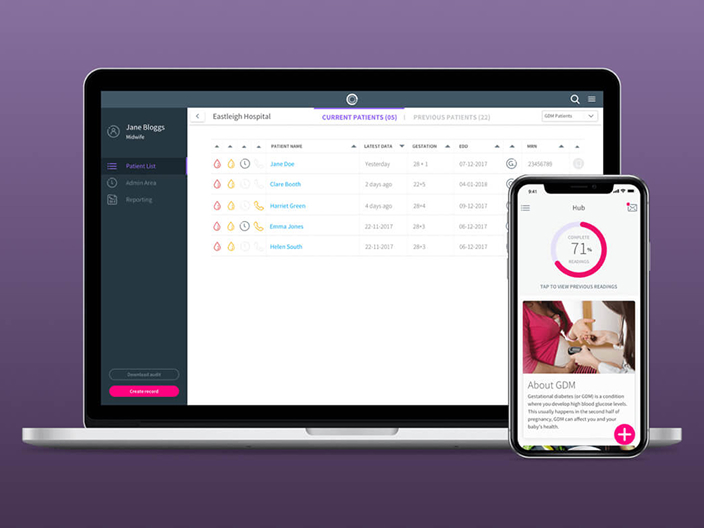
This product was classified as SaMD, therefore from the outset I intentionally ensured our design process was fully traceable and version controlled. To do this, I developed a Design System using Sketch and Abstract for version control, traceability and collaboration. The designs were then synced with Zeplin, so the engineers could easily see the designs and access assets and elements such as fonts, colours, and measurements.
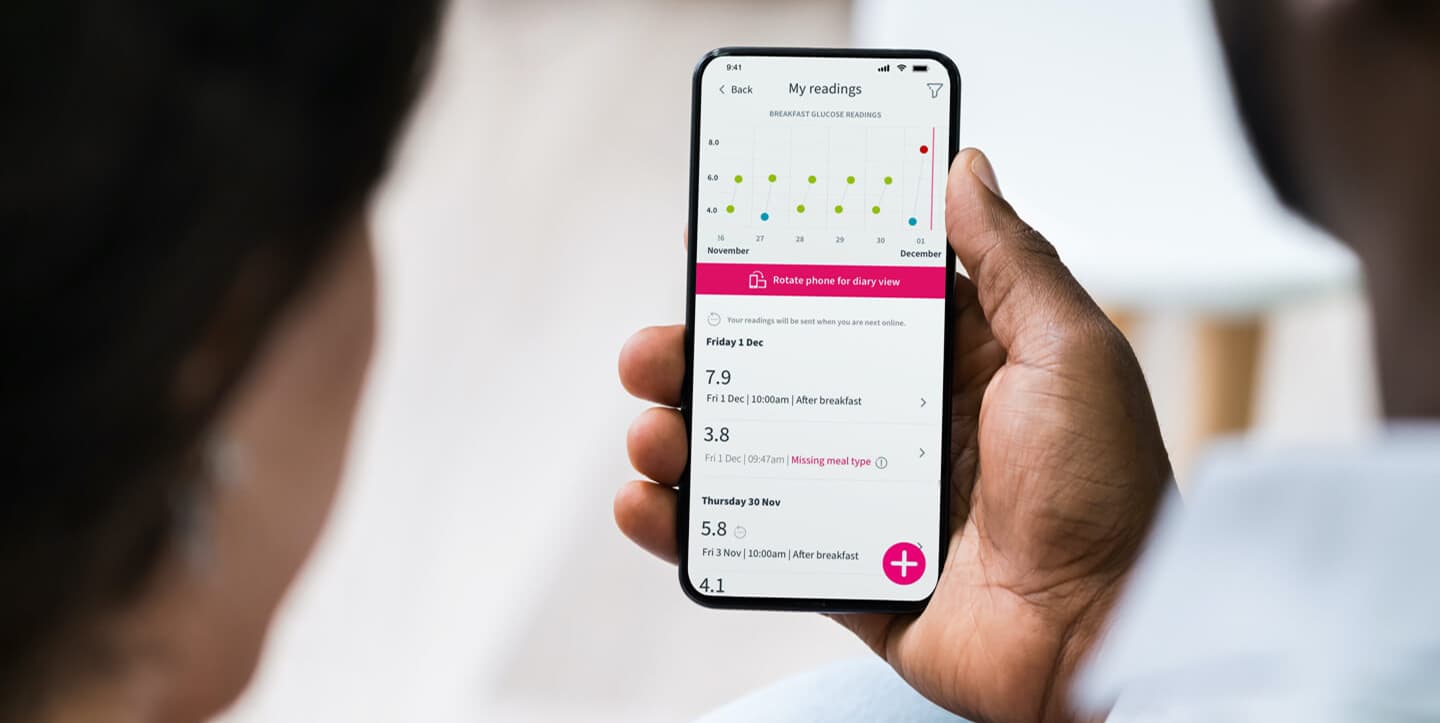
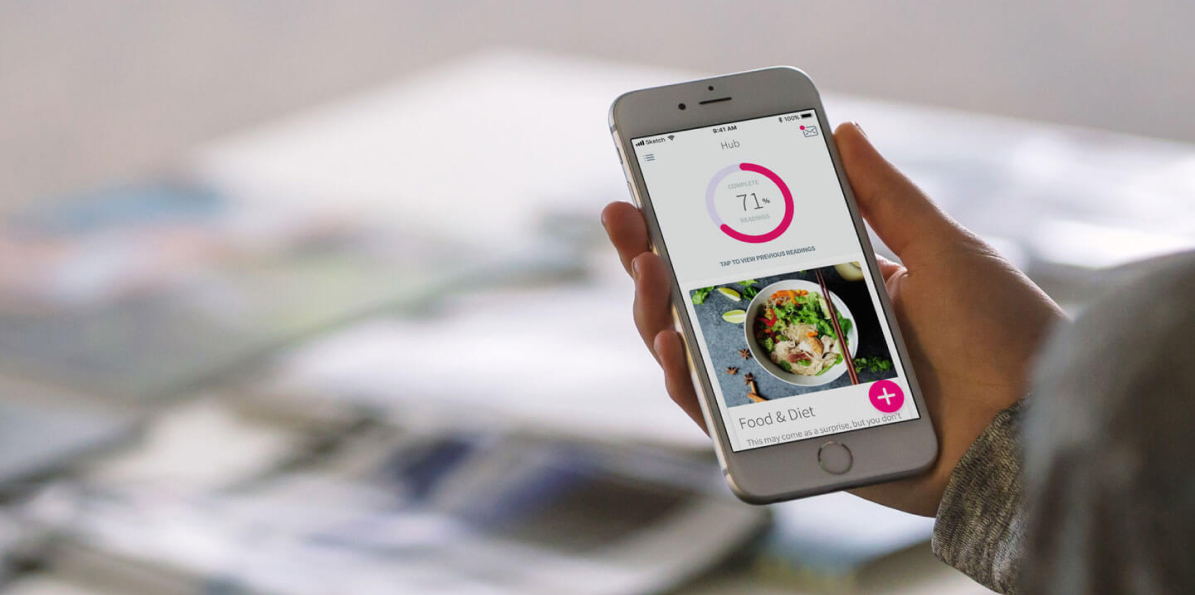
The core function of the app allows users to log Blood Glucose (BG) readings on a mobile application, and give the midwives a real-time view of the condition progression. Users can also attach comments to BG readings (such as how they were feeling, or why a reading might be particularly low or high), add meal tags, log the medications taken, and request a call-back from their midwife if they have a concern. In the clinic, midwives and other clinicians can use a web app to review and monitor blood sugar results, message women via SMS with advice or feedback, and intervene if needed.
As a team, we managed to create an inviting and easy-to-use product that people - pregnant women and midwives - could use day-to-day, at home, and at work.
Conclusion
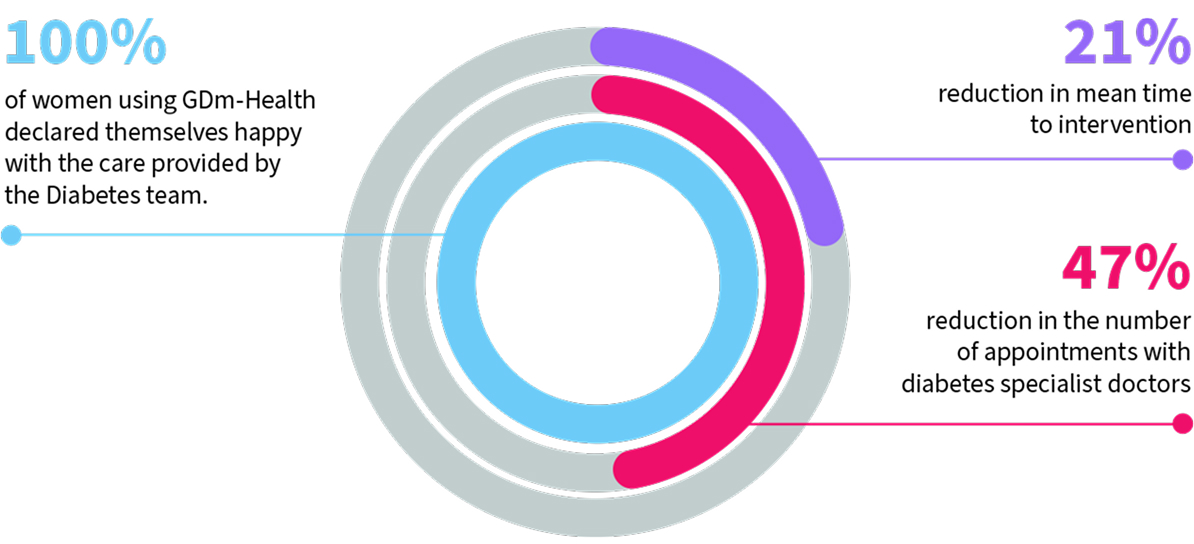
Through follow-up interviews with patients, we gathered positive feedback on new the articles feature. Clinicians also noted improved initial appointments with patients, and that they could spend more time talking to the patient about managing the condition rather than explaining what it is because patients had already read the information within the articles.
There was also less time spent on admin, with the ability to sync a patient record with the system remotely with the use of Activation codes.
GDm-Health is now available in over 40 NHS Trusts, covering nearly half of all pregnancies in England. Sensyne Health was awarded a prestigious HSJ Partnership, for providing a digital health solution for diabetes during pregnancy.